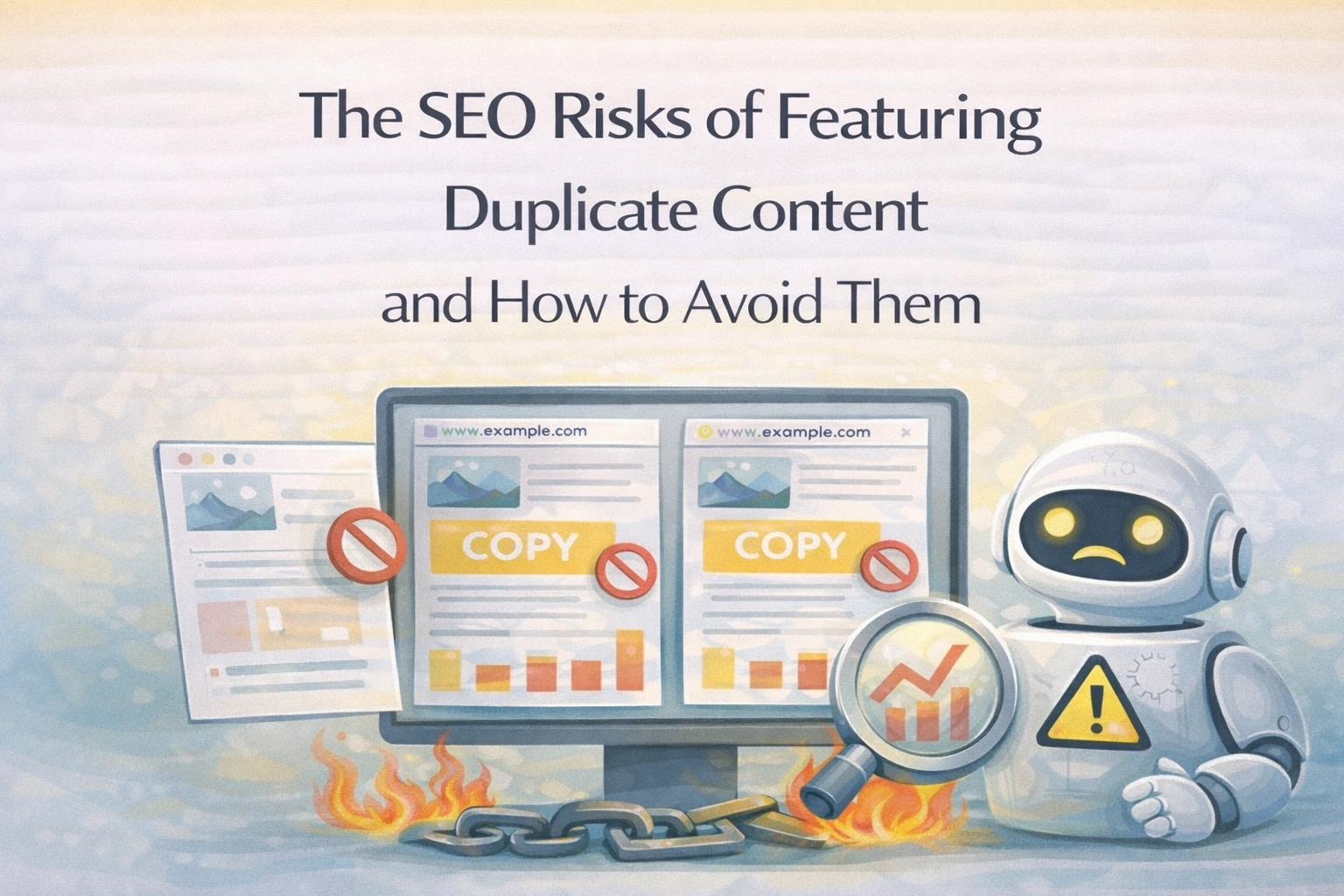
Content duplication, often overlooked, is one of the root causes behind a website’s poor SEO performance. This issue usually emerges when exact or nearly identical content is found on multiple URLs. Such a situation can severely harm a website’s SEO by reducing search rankings, diluting link authority, decreasing the influx of organic traffic, and leading to the likelihood of penalties imposed by search engines.
The best way to avoid such problems is to pay attention to duplicate content and fix it before it becomes too late. You have to employ multiple techniques to identify and eradicate duplicate content from your website. However, many SEO professionals and webmasters are unaware of these methods.
Given this, we have crafted a comprehensive article that takes a deeper dive into the negative consequences of duplicate content in terms of SEO. Additionally, this article suggests effective, actionable practices to mitigate SEO risks because of multiple pages featuring duplicate content.
Read on to learn more.
Risks Because of Duplicate Content
The existence of duplicate content on multiple URLs linked to a single website leads to various negative SEO outcomes.
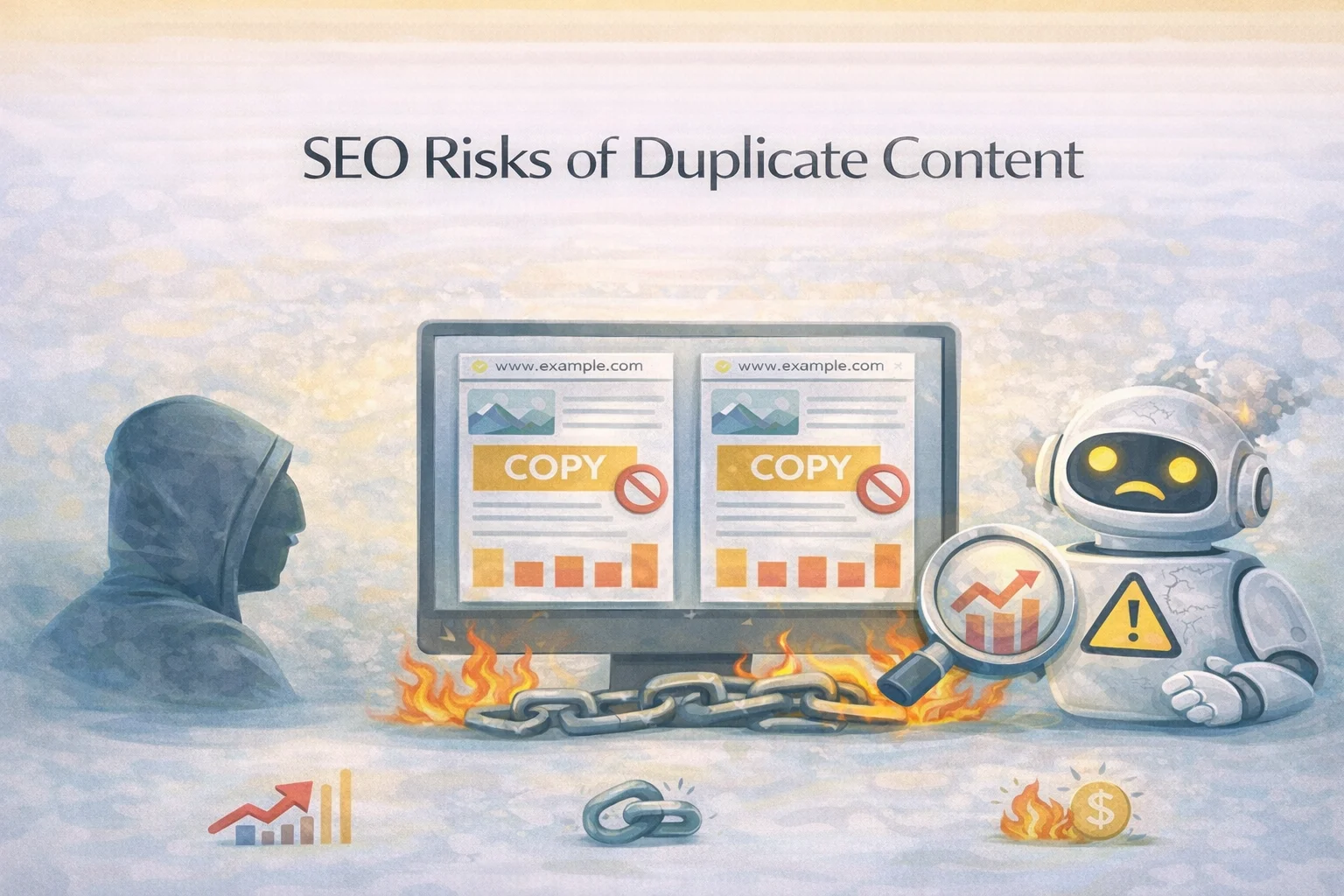
Duplicate content can cause severe SEO damage including:
Subpar Search Rankings
Lower rankings leading to reduced organic traffic and visibility.
Diluted Backlink Authority
Link equity splits across duplicate pages, weakening overall impact.
Wasted Crawl Budget
Search engine bots waste resources on duplicate URLs.
Potential Penalties
Extreme cases can lead to deindexing or search penalties.
Here are the most prominent consequences:
Subpar Search Rankings
The most negative consequence of content duplication is lower search rankings, leading to reduced organic traffic to the website. Search engines may struggle to identify the original version upon coming across multiple pages featuring the same content. Resultantly, a page with lesser relevance or authority is chosen over the original page. This scenario leads to lower rankings of all versions.
Lower Backlink Authority
Damages to a website’s SEO occurring because of content duplication go beyond reduced search rankings and organic traffic. The situation also leads to diluted backlink authority. Multiple pages having identical text cause unfair distribution of inbound links from other websites.
Consolidated Link Equity
- All backlinks point to one URL
- Maximum authority concentrated
- Stronger ranking signals
✓ Optimal for SEO
Split Link Equity
- Backlinks spread across duplicates
- Diluted authority per page
- Weakened ranking potential
✗ Harmful for SEO
The spread of the links across multiple pages significantly dilutes the backlink authority. A simple reason behind such an outcome is split link equity and the reduced impact of each backlink. The end result of this scenario is weakened overall ranking potential.
Loss of Crawl Budget
Search engines don’t have unlimited time and resources to navigate through every single page of a particular website. Hence, a limited crawl budget is allotted to explore information posted on each website.
How Duplicate Content Wastes Crawl Budget
Bots Crawl Duplicate URLs
Search engine crawlers spend time and resources on identical content across multiple URLs.
Crawl Budget Depletes Faster
Less time and resources remain for search engines to effectively navigate your website.
Unique Pages Get Overlooked
Bots fail to index all the unique and valuable pages, resulting in lower exposure of content that offers value to your target audience.
Likelihood of Potential Penalties
You may also witness your website getting penalized because of excessive duplicate content. In extreme cases, when thin or low-quality content with malicious intent is found across multiple pages, search engines can penalize your website or deindex it altogether.
⚠️ Warning: Potential Consequences
Content duplication can severely impact the visibility of your website and make you lose all incoming traffic from a single or multiple search engines. Prevention is crucial!
Lost Trust and User Engagement
Any netizen accesses a website to gain unique, valuable insights that no other source can offer. However, seeing identical content across multiple pages not only leads to a negative user experience but also causes frustration.
Resultantly, higher bounce rates and decreased dwell time become common.
Impact on User Metrics
Higher Bounce Rates
Users leave quickly when encountering repetitive content. Solution: Create unique value propositions for each page.
Decreased Dwell Time
Confusion and poor browsing experience reduce time on site. Solution: Provide distinct, valuable content on every page.
Lost User Trust
Search engines take notice of these metrics and modify rankings accordingly. Solution: Maintain minimal bounce rates and optimal engagement.
Practices to Avoid Risks Emerging Because of Duplicate Content

There is always a solution to every problem we see, and the same is applicable to SEO risks because of duplicate content. You only need to know the technique you can employ to identify, fix, and mitigate such instances.
9 Proven Strategies to Prevent Duplicate Content
Craft Unique Content
Create original content for each page
Implement Canonicalization
Use canonical tags to indicate preferred versions
Use 301 Redirects
Permanently redirect to canonical URLs
Here are the detailed strategies:
1. Craft Unique Content for Each Page
We know you may need to target the same topic or product multiple times, but you can still keep the content unique on each page by specifying distinct purposes for individual pages.
2. Implement Canonicalization
The chances of the existence of multiple versions of a single page are very much possible. Such a situation may arise because of:
- URL parameters
- Site structure variations
- Content syndication
The Canonical Tag Solution
Tell search engines which version to index
<link rel="canonical" href="https://yoursite.com/preferred-page">
3. Use 301 Redirects
You may need to implement 301 redirects when you plan to permanently divert the traffic intended towards a duplicate page to the original or preferred version.
Common use cases:
Redirect Duplicate to Original
Permanently redirect duplicate pages to the canonical version.
HTTP to HTTPS
Transfer HTTP traffic to HTTPS for security and consistency.
Standardize Domain Format
Choose between www and non-www and redirect consistently.
Doing so helps you ensure users and search engines only access the right content and canonical version.
4. Configure CMS
Sometimes, the problem of content duplication may arise due to the non-configuration of the CMS you are using to run your website.
⚙️ CMS Configuration Tips
The content management system (CMS) may generate duplicate content on its own while maintaining consistency across URL structures. Configure your CMS to canonicalize or redirect URLs with trailing slashes, www, or non-www versions automatically.
5. Update Content Syndication Strategy
The content syndication strategy of any website needs updates to maximize its effectiveness, become precision-centric, and leverage data-driven approaches. It enables a website to enhance its ROI and reach a wider targeted audience.
Key considerations:
- Prevent unintended duplication while syndicating content
- Leverage canonical tags pointing to original source
- Ensure proper attribution
- Use best practices to avoid issues
6. Identify Duplication Beforehand
Chances of duplicate content, which is nearly identical to existing information posted on your website, are very much possible when you are targeting the same niche, topic, or product.
Proactive Detection
Stay vigilant and catch issues early
7. Regularly Perform Audits
You must also run audits of your sites regularly using dedicated SEO tools like Ahrefs to spot duplication and take necessary measures to resolve them before they become a headache.
- Ahrefs Site Audit
- Screaming Frog SEO Spider
- SEMrush Site Audit
- Google Search Console
Using specialized SEO tools will help you pinpoint instances where duplicate content is confusing bots and consuming a large chunk of crawl budget.
8. Make Sitemap Updates
Make it easier for search engines to understand the hierarchy of your website and key pages that require more attention and exposure from the target audience.
9. Localize Content
Content duplication may also occur when you mishandle or fail to configure localized pages featuring nearly identical content tailored to address the target audience residing in multiple geographical regions.
Localization Tips
Use Hreflang Tags
Implement hreflang annotations to signal language/region targeting.
Create Unique Regional Content
Aim to post unique content tailored to the target audience knowing a particular language.
Configure Properly
Learn to handle and configure localized pages appropriately to avoid duplication.
Summing it Up
Multiple pages featuring exactly similar or identical content lead to duplication issues. These issues pose a serious threat to the overall SEO performance of a website.
A website with duplicate content will likely face these consequences:
Subpar Search Rankings
Reduced visibility and organic traffic.
Diluted Link Equity
Weakened backlink authority across pages.
Loss of Crawl Budget
Wasted resources and missed indexing opportunities.
Potential Penalties
Risk of deindexing or manual actions.
However, you can easily avoid these issues by implementing a few fixes:
Key Prevention Strategies
Additionally, crafting unique content, identifying duplication beforehand, and running regular audits also help you avoid such consequences.
So, follow the practices discussed above and eradicate content duplication to thrive in search rankings!
Frequently Asked Questions
What is duplicate content in SEO? ^
How do I check for duplicate content on my website? ^
What's the difference between canonical tags and 301 redirects? ^
Will Google penalize my site for duplicate content? ^
Want to learn more about building quality SEO strategies? Check out our comprehensive guides on Technical SEO and Link Building Strategies for more advanced techniques.
About the Author: The SEO Webster team has helped hundreds of websites identify and resolve duplicate content issues, improving their search rankings and organic traffic. Our expertise in technical SEO ensures your website stays penalty-free and optimized for maximum visibility.
Have questions about this article?
Ask the AI assistant anything — it has context on everything you just read.
AI Assistant
Ask about this article
I can summarize this article, explain concepts, and suggest related posts on SEOwebster.com.
Try asking